Ashtanga Yoga
La Palma
A traditional, structured practice that invites us to cultivate discipline, concentration and presence through repetition and consistency.
Ashtanga Vinyasa Yoga is a system of yoga developed and passed on by Sri K. Pattabhi Jois in Mysore, India, based on the teachings he received from his teacher Tirumalai Krishnamacharya. The method combines asana, breath and gaze (drishti) within set sequences of postures that are practised in a specific order.
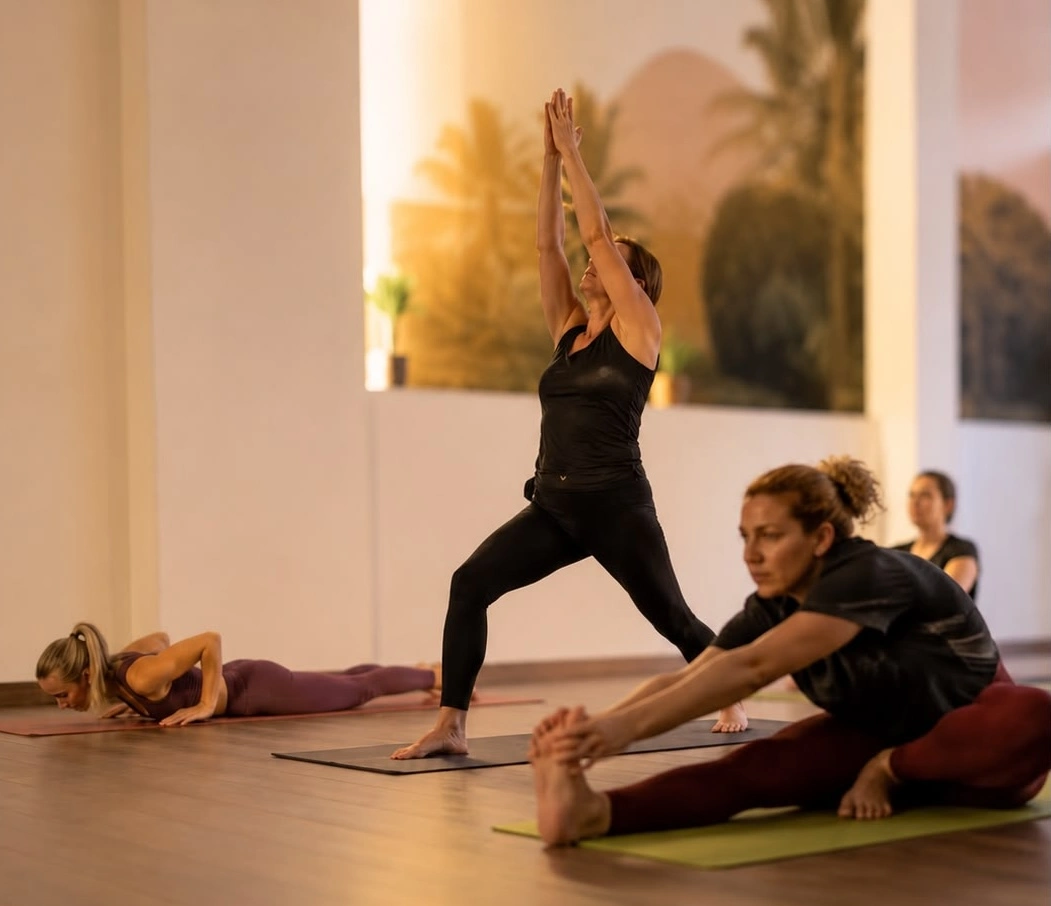 Practising Ashtanga Yoga.
The word Ashtanga literally means “eight limbs” (ashta = eight, anga = limb) and refers to the eight-step path described by Patañjali in the Yoga Sutras. Although today we mainly use this name to refer to the Ashtanga Vinyasa system, its philosophy reminds us that yoga is much more than the physical practice, and that working with the body can become a path towards greater awareness.
In Ashtanga, the sequence is repeated consistently. Far from seeking to make every practice different, this repetition allows us to go deeper into what we already know. As we become familiar with the postures and the transitions, we can gradually turn our attention towards the breath, the inner sensations and the quality of our presence.
The practice traditionally begins with Surya Namaskara, continues with the standing postures and then with different sequences of seated postures, twists, backbends, inversions and closing postures. The movement is synchronised with a specific breath, and each posture has a set number of breaths and a gaze (drishti) that helps to maintain concentration.
At Tushala we practise Ashtanga with respect for the tradition, but also with a mindful approach adapted to each body. We are not trying to force a posture or to achieve a particular shape, but to learn to practise with attention, patience and respect for our own limits.
Ashtanga Mysore
In Mysore classes, each student practises the sequence individually within a shared space. We do not follow the pace of a teacher leading the whole class; each person progressively learns and memorises their practice, while the teacher accompanies, observes and offers guidance and adjustments when needed.
This format allows each person to progress at their own pace, regardless of their experience or physical level. The practice thus becomes a personal encounter with oneself: we return to the same sequence again and again and observe what changes in our body, our breath and our mind.
Ashtanga requires commitment and consistency, but it is not about quickly reaching more advanced postures. The depth of the practice lies in coming back, breathing, observing and continuing to practise.
A practice for those looking for structure, discipline and a path of deepening, who want to discover what can arise when we stop constantly searching for something new and learn to be fully present in what we already know.